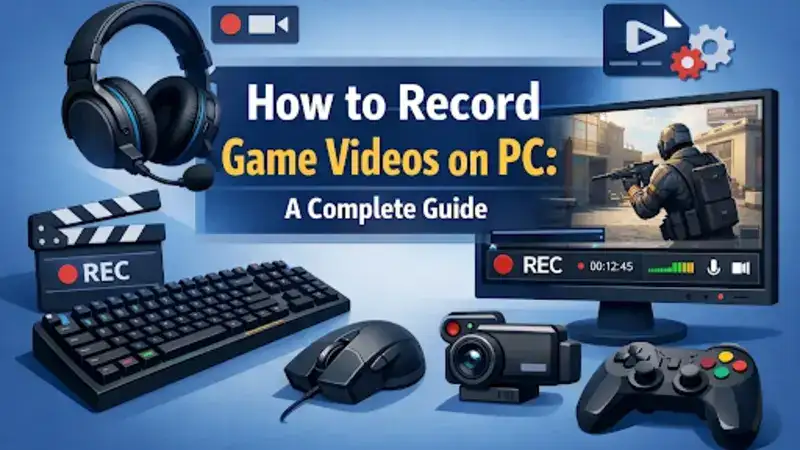
Recording gameplay has become essential for PC gamers today. You might want to share your best moments with friends. You could be creating content for YouTube or Twitch. Maybe you’re building tutorials to help other players. Whatever your reason, knowing how to record game clips on PC opens many doors.
This guide covers everything you need. You’ll learn what equipment and software you need. We’ll walk through the recording process step by step. You’ll discover the best tools available. By the end, you’ll be ready to capture your gaming moments like a pro.
What You Need Before Recording
Before you start recording, check your PC specs. Your computer needs enough power to run the game and record at the same time. A modern processor helps a lot. At least 8GB of RAM is recommended. More RAM gives better performance.
Storage space matters too. Video files take up lots of room. Make sure you have at least 50GB free on your hard drive. An SSD works better than a regular hard drive. It writes data faster during recording.
Your graphics card plays a big role. Nvidia and AMD cards come with built-in recording features. These use less system resources. If you have an older GPU, you can still record. You’ll just need to adjust your settings.
Good audio equipment improves your recordings. A decent microphone captures clear voice commentary. Headphones help you monitor sound while playing. You don’t need expensive gear to start. Basic equipment works fine for beginners.
Step-by-Step Guide: Recording a Game Video
Launching the Screen Recorder
First, open your chosen recording software. Most programs run in the background while you play. Look for the software icon in your system tray. Right-click it to access quick settings.
Launch your game after starting the recorder. Some software automatically detects games. Others require you to select the game window manually. Make sure the recorder is set to capture the right screen.
Setting Recording Parameters
Video quality settings affect file size and performance. Resolution determines how clear your video looks. 1080p works well for most purposes. 4K looks better but creates huge files.
Frame rate controls smoothness. 30 FPS is acceptable for basic recordings. 60 FPS looks much smoother and more professional. Choose based on your PC’s capabilities.
Bitrate affects quality and file size. Higher bitrate means better quality. It also creates larger files. Start with 5000-8000 kbps for 1080p recording.
Audio settings need attention too. Enable microphone recording if you want commentary. Make sure game audio is captured. Test your audio levels before recording anything important.
Starting the Recording
Press the hotkey to begin recording. Most software uses a simple key combination. Common hotkeys include F9, F10, or Ctrl+R. Choose a hotkey that doesn’t conflict with game controls.
A small indicator shows you’re recording. This might be a red dot or timer. Some software shows FPS and recording time. These indicators help you monitor your session.
Play your game normally. Try to forget about the recording. Natural gameplay makes better content. Focus on playing well and having fun.
Pausing and Stopping the Recording
Most recorders let you pause during gameplay. This helps if you need a break. Paused sections won’t appear in your final video. Use this feature to trim unnecessary parts.
Press the stop hotkey when you’re done. The software saves your recording automatically. Some programs show a preview right away. Others save the file and notify you when finished.
Check the save location immediately. Make sure the file recorded properly. Watch a few seconds to verify quality. This prevents disappointment later.
Editing and Exporting
Basic editing improves your recordings. Cut out boring parts or mistakes. Add an intro and outro for polish. Many free editors work well for beginners.
Trim the start and end of your video. Remove loading screens and menu navigation. Keep only the exciting gameplay moments. This keeps viewers engaged.
Export your video in the right format. MP4 works for almost everything. Choose H.264 codec for compatibility. Adjust quality settings based on where you’ll upload.
Best Screen Recorders for Gameplay
Leawo Free Screen Recorder
Leawo Free Screen Recorder offers an excellent starting point. The software is completely free to use. It records both your screen and audio clearly.
You can capture the full screen or just the game window. This flexibility helps in different situations. The interface is simple and clean. New users learn it quickly.
The software works well for casual recording. You don’t need technical knowledge to start. It’s perfect for beginners or casual game video creators. Recording quality is solid for free software.
However, if you want to record gameplay video on YouTube, Twitch, TikTok, or other streaming platforms, a standard screen recorder might not be your best option. In these cases, try CleverGet Recorder instead. It’s specifically designed for capturing streaming content.
OBS Studio (Open Broadcaster Software)
OBS Studio dominates the streaming world. It’s completely free and open source. Professional streamers and YouTubers use it daily.
The software is highly customizable. You can adjust every setting imaginable. This flexibility makes it powerful but complex. New users face a learning curve.
OBS supports plugins and extensions. These add extra features and functionality. You can stream live while recording. Many tutorials help you learn the software.
Nvidia ShadowPlay / GeForce Experience
Nvidia GPU owners get this free tool. It uses hardware acceleration for recording. This means minimal impact on game performance.
ShadowPlay offers instant replay features. It constantly records in the background. Press a hotkey to save the last few minutes. This captures unexpected amazing moments.
The software is easy to use. Settings are straightforward and clear. Recording quality is excellent with low file sizes. Only works with Nvidia graphics cards.
AMD ReLive
AMD users get their own recording solution. ReLive is built into AMD drivers. The interface is clean and simple.
Performance on AMD systems is excellent. The software uses hardware encoding efficiently. This keeps your frame rates high while recording.
ReLive includes basic streaming features. You can broadcast directly to popular platforms. Quality settings are easy to adjust. Works only with AMD graphics cards.
Bandicam
Bandicam is lightweight and efficient. It produces high-quality recordings consistently. The software runs smoothly on most systems.
The interface is user-friendly. Settings are organized logically. You can start recording in minutes. Performance impact is minimal.
Bandicam requires a paid license for full features. The free version adds a watermark. Paid version removes limits and watermarks. Pricing is reasonable for the features offered.
Troubleshooting and FAQs
Recording Lag or Low FPS
Performance issues frustrate many new recorders. Your game might stutter during recording. Frame rates might drop significantly.
Lower your recording resolution first. Try 720p instead of 1080p. This reduces processing demands immediately. Reduce frame rate to 30 FPS if needed.
Close unnecessary background programs. These steal system resources. Disable browser tabs and other applications. Focus your PC’s power on gaming and recording.
Use hardware encoding when possible. Nvidia and AMD cards handle this well. Change encoder settings in your software. This shifts work from CPU to GPU.
Audio Not Captured Correctly
Audio problems are common issues. Game sound might be missing. Your microphone might not record. Levels might be too quiet or loud.
Check your audio device settings. Make sure the right devices are selected. Verify microphone and speakers in recording software. Test before starting important recordings.
Adjust audio levels in the software. Game audio and microphone need balance. Your voice should be clear but not overwhelming. Game sounds should support but not dominate.
Some games have audio protection. This blocks recording of game sound. Try different recording modes. Window capture often works better than full screen.
Video Too Large or Low Quality
File size and quality create a balancing act. High quality means large files. Small files often look poor.
Bitrate controls this balance. Lower bitrate reduces file size. Quality drops as bitrate decreases. Find the sweet spot for your needs.
Video codec affects size and quality. H.264 offers good compression. H.265 compresses even better but needs more processing. Choose based on your editing software.
Record at your intended final resolution. Don’t record 4K if you’ll upload 1080p. This wastes storage space unnecessarily. Match recording to output requirements.
Crashes During Recording
Software crashes ruin great recordings. Your game might freeze or close. The recording software might stop responding.
Update your graphics drivers regularly. Old drivers cause many problems. Visit Nvidia or AMD websites for updates. Install the latest stable version.
Run software as administrator. This gives needed system permissions. Right-click the program icon. Select “Run as administrator” from the menu.
Reduce recording settings if crashes persist. Lower resolution and frame rate. Disable extra features you don’t need. Stability matters more than maximum quality.
Check for software conflicts. Some programs don’t work together well. Disable overlays from other applications. Close RGB lighting software during recording.
Conclusion
Recording gameplay on PC is easier than ever. Many excellent tools are available now. Free options work great for beginners. Professional tools offer advanced features.
Start with simple software and basic settings. Learn the fundamentals before getting complex. Practice recording short clips first. Build your skills gradually over time.
Experiment with different programs and settings. Find what works best for your PC. Every system performs differently. Your perfect setup might differ from others.
Remember that content matters most. Technical quality is important but secondary. Focus on capturing great gaming moments. Share your passion with your audience.
Now you’re ready to record your gameplay. Choose your software and start practicing. Your gaming highlights deserve to be saved. Good luck with your recording journey!